The government authorizes the Rs1.23 trillion loan’s Letter of Comfort.
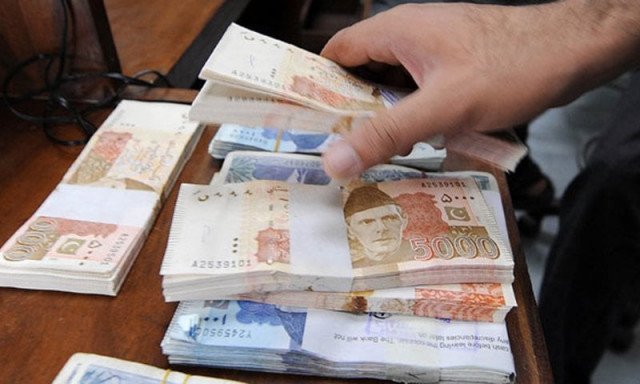
In order to meet the requirements for the distribution of a loan of Rs1.23 trillion received for the settlement of circular debt, the government approved the issuance of a Letter of Comfort in favor of banks on Friday. The government also agreed to assume responsibility in the event that the cash-starved power sector is unable to repay the debt.
The cabinet’s Economic Coordination Committee (ECC), chaired by Finance Minister Muhammad Aurangzeb, also approved a plan to waive Rs120 billion in interest that the Pakistan Atomic Energy Commission (PAEC) owes its fuel suppliers for late payments. Under the same accord, it also agreed to transfer the Rs22 billion debt to gas customers.
According to an official release, the ECC authorized the issuing of sovereign guarantees of Rs659.6 billion for the financing of Rs1.225 trillion in circular debt. Power Holding Limited’s (PHL) debt and past-due payments to independent power producers (IPPs) are to be settled with the guarantee.
In order to take out loans totaling Rs1.225 trillion to compensate electricity producers, the government and commercial banks signed finance and security agreements last month. Customers of electricity would be charged a surcharge of Rs3.23 per unit to cover the principal and interest on loans.
The banks refused to lend the money because of the electricity sector’s bad financial standing and insisted on receiving the Ministry of Finance’s Letter of Comfort. The “ECC authorized the Finance Division to issue a Letter of Comfort,” according to an official release.
Before the first drawing of circular debt financing, Habib Bank Limited will then consider the letter as sufficient compliance.
In accordance with the Memorandum of Understanding (MoU) inked for the restructuring of power purchase agreements, the ECC authorized the Central Power Purchasing Agency-Guarantee (CPPA-G) to carry out negotiated settlement agreements (NSAs) after approving the MoUs with PAEC.
The ECC gave CPPA-G and PAEC permission to modify the pertinent agreements and make any necessary adjustments to standardize them. Additionally, based on debt settlements between the parties, it gave PAEC permission to submit tariff petitions to Nepra for revised tariffs for five nuclear power facilities.
But according to some ECC members, such agreements did not significantly lower tariffs, and prices were once more expected to rise as a result of monthly fuel cost changes and quarterly tariff increases.
The Rs119.5 billion late payment interest remission was authorized by the ECC. According to the agreement, CPPA-G was authorized to pay OGDCL Rs89.5 billion in one lump sum rather than 18 monthly installments through Uch Power Limited (UPL-I) and UPL-II from the circular debt financing facility.
To allow Ogra to include the Rs21.9 billion adjustment in the cost of RLNG supply, the government would release a policy guideline.
The ECC decided to move the Fatima Fertilizer, Agritech, and Fauji Fertilizer Bin Qasim facilities to Mari Energies’ gas supply network. Over the following two years, Mari will provide these plants with 170 mmcfd of gas from a new field that will be built with a $200 million investment.
In order to guarantee a sufficient and reasonably priced supply of fertilizer, all ten of the fertilizer plants have been moved to Mari Energies.
Mari Gas Field will receive the raw gas from the Ghazij-Shawal facility. Facilities for gas processing, compression, injection, and transportation within the network of Sui firms to their individual plant sites must be installed by the corresponding fertilizer clients.
The applicable wellhead price, as periodically announced by Ogra, must match the gas price at the delivery location. Customers of fertilizer must sign bilateral contracts with Mari Energies for the sale and purchase of gas.
When a “swing volume” becomes available from any of the reservoirs, Mari will be allowed to supply it to any of its clients, including SNGPL/SSGCL, on a “as and when available basis” at the relevant gas price as announced by Ogra.
The Ministry of National Food Security’s proposal to reallocate funding within the division was accepted by the committee. In order to assist continuing agricultural research projects, the permission permits the transfer of resources from the IPC Division through a technical supplemental grant.