The Maritime Minister takes action to improve Port Qasim’s cement and sugar operations.
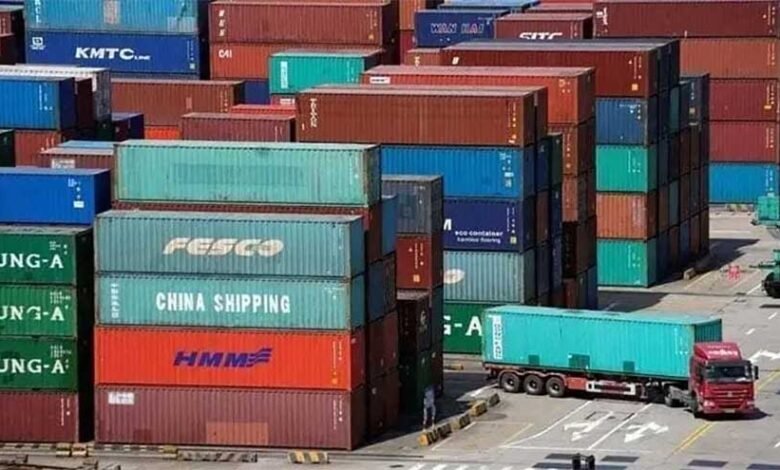
Following complaints of significant congestion brought on by the sluggish discharge of sugar consignments, the Ministry of Maritime Affairs has taken steps to expedite the handling of cement and sugar at Port Qasim.
Federal Minister for Maritime Affairs Muhammad Junaid Anwar Chaudhry presided over a high-level meeting that examined the state of affairs and its effects on exports, specifically shipments of cement and clinker.
In his remarks, Junaid Anwar Chaudhry emphasized the necessity of improving operational effectiveness, coordinating smoothly among stakeholders, and matching port management with national logistics priorities.
In order to guarantee the timely and seamless discharge of shipments, the minister emphasized that all ports must improve their operating efficiency. This is because port congestion can lead to delays, increased expenses, and supply chain disruptions.
It was reported to the conference that the port’s potential capacity was being exceeded by the rate at which sugar was being unloaded. The Port Qasim Authority (PQA) was instructed by the minister to optimize sugar unloading operations in accordance with its daily discharge capability of around 4,000 to 4,500 tons.
In order to reduce the strain on Karachi’s terminals, the meeting also examined directions from the Prime Minister’s Office, including the use of Gwadar Port for up to 60% of sugar imports. Participants also talked about berthing priorities and how to avoid bottlenecks that could slow down ships headed for export.
The committee decided to rigidly berth all vessels at Karachi Port and Port Qasim on a first-come, first-served basis.
To prevent future congestion, the TCP was told to enhance its operational planning, make sure that vessel arrivals are properly coordinated, and be in constant contact with port authorities.
Enforcing the berthing regulation and closely observing discharge performance were the duties assigned to both port authorities. Penalties were to be imposed for needless delays.
Prior to the arrival of goods, the federal minister instructed all pertinent agencies, including TCP and other state importers, to coordinate their freight movement arrangements with the Ministry of Maritime Affairs.
He praised the positive participation of all parties and underlined that maintaining ports’ effectiveness and averting another occurrence of these logistical setbacks required constant adherence to the established protocols and performance criteria.